Saturday, March 17, 2012

Inspirational Teaching Models Using Game-based Learning, "Some people got hopes and dreams. Some people got ways and means."

Conversations on game-based learning in Junior Achievement


What skills are relevant to Jamaican students in a 21st century context? Some teachers and students expressed the need to develop financial literacy in order to make wise investments, participate in the global market and aid in Jamaica's economic growth. 

Students in Junior Achievement work in teams, learning through hands-on, experimental learning, to develop their own businesses.
Chris discusses game-based learning activities in this student's financial literacy class.
One student expressed to Josephine that her class in financial literacy was fun and engaging while her other classes were just classes.  

Even when students succeed in school, there are not always jobs available for graduates and they often must look for employment outside of Jamaica. If students have education that encourages them to be active agents in creating businesses, and collaborate in small company teams, their education becomes a tool to construct employment options for the future. 

Robert and Paul listen to students' experiences with Junior Achievement  
Shua explores what makes school engaging for students.  

Friday, March 16, 2012

Day 3 & 4: Schools, "None but ourselves can free our minds."

For two days, our team of 14 broke into pairs and visited seven schools throughout Kingston. The Ministry of Education assisted us by arranging the site visits and granting us access to classrooms and the opportunity to interview students, teachers and school administrators. We found that the seven schools all had strong principals and that our small sample may not be an accurate representation of most school in Jamaica. At each campus, we gained insight into existing pedagogical practices that utilized sports and game-based learning as means to improve student outcomes. 


Guest Blog: Christopher Kajander


        Jamaica College is an all-boys high school founded in 1789. Addy and I spent two days on the beautiful campus talking with students, teachers, and administrators. The culture is steeped in sports, competition, and excellence. When you drive up to the campus one of the first things you see is a sign reading “School of Champions,” and both the students and faculty are proud of their accomplishments: 15 Rhode Scholar recipients to date, numerous track and field championships, soccer championships, the list goes on and on.
        The most interesting conversation in my view was the one we had with the principal, Mr. Reed.  Jamaica College had been in decline for a number of years and their reputation had suffered. Mr. Reed was brought in 7 years ago and he turned the school around. This sentiment was voiced by both teachers and students.  We spoke at length about his approach to teachers, his approach to the community, his many methods of assessment, and how he builds culture. The thing I found most interesting was his use of student and parent opinions to create a comprehensive assessment of teachers, administrators and the school. He wants to know if the community feels like the school is doing a good job.  It isn’t the only assessment he uses to evaluate teachers and staff, but it helps paint the bigger picture. 


Queen's School in Kingston, Jamaica
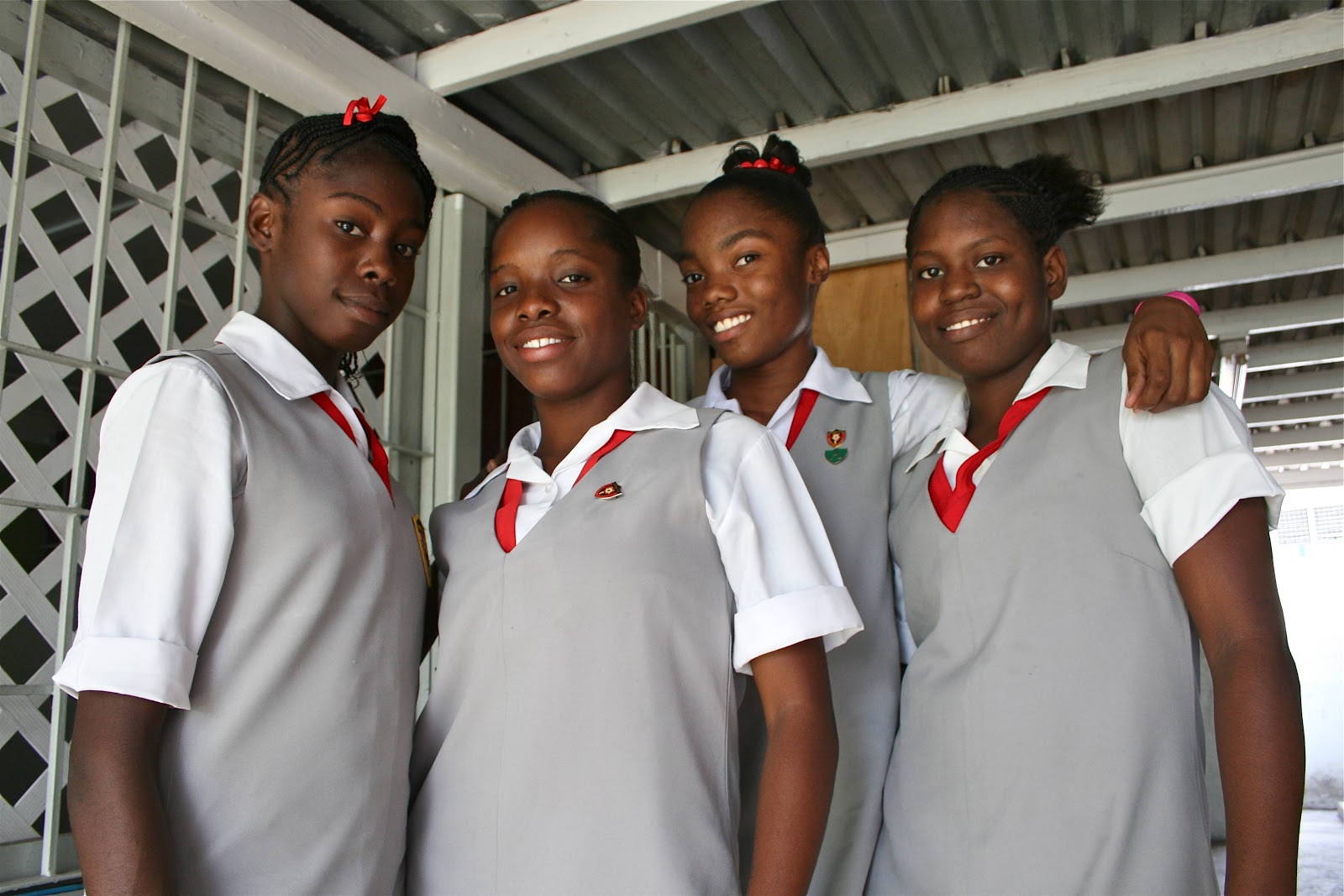
At the Queens School, we found that the girls took pride in their sports activities and academic pursuits.  

The girls grilled us on how to get into Harvard and shared their ambitious career goals. 
Education for girls in safe spaces can be one way to promote gender equity in the broader society. 
Teachers commented that they would like to incorporate Jamaica's national athletes into the classroom to serve as role models to students. Unfortunately, this aspiration is constrained by the reality that many of the athletes are exported overseas to train and study in U.S. universities.

Teaching the value of team work, participation, communication and effort through sports.  

Colleen was not kidding when she said she wanted to learn more about Reggae as a teaching tool in Jamaican schools. This is no laughing matter. 
Shamayne, graduate student in the Education Policy and Management program at HGSE, interviews students, teachers and administrators about education in Jamaica while drawing comparisons with the U.S. education system.
Sports in education.


Monday, March 12, 2012

Day 2: Exploring Jamaica, "Is This Love?"


On Sunday, we had the day to ourselves in order to prepare for our upcoming project and explore Jamaica.  


Hellshire Beach
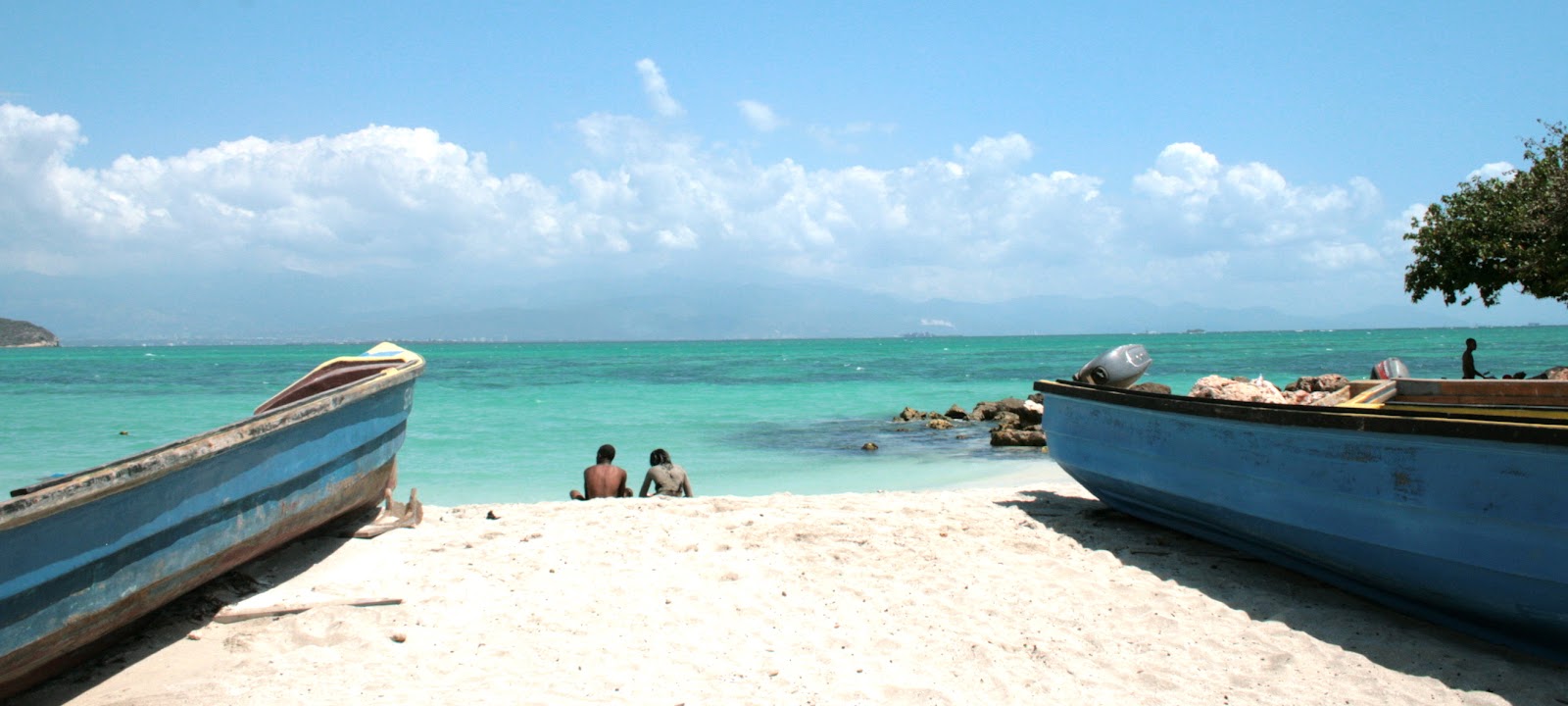
Sipping coconut juice, swimming, visiting with horses and slow jam'n on Hellshire Beach. 


Guest Blog: Christopher Kajander
"I Thank God That I Finally Found You." 
       I had an epiphany on Hellshire beach. I was waist deep in the turquoise water listening to 90s Slow Jams.  All the hits from my middle-school dance days rolled out of 8-foot speakers that framed the entrance to a beach hut where they served fried parrot fish and warm Red Stripe for the locals, cold for the foreigners.  Boyz II Men, KC and JoJo, R. Kelly—all the artists who first defined love for me, their songs providing my first opportunity to slow dance with a girl— were blending my beach experience with a strange mix of nostalgia and newness. These songs that lived and breathed in the middle-school gymnasiums of my youth suddenly felt so perfect on this strip of pristine white sand on an island far from home. Paul Perry and I sang along while Colleen and JingJing laughed at our attempts to hit the high notes. I didn’t know it until then, but all my life I had prayed for something like this. In that moment I had an epiphany: After  listening to Slow Jams on a beach, I’m not sure I can ever go back to Slow jams without a beach, or go to a beach without Slow Jams.


Robert reaches enlightenment, again, while contemplating the many ways to describe how much he enjoys his lunch. 
Catch of the day.

Dawn, a HGSE doctoral student from Jamaica, shares her knowledge on Jamaican culture and customs.

Paul is mesmerized by the repertoire of 90's slow jams played on the beach and the fact that he and Chris are able to sing the lyrics to each one.  

Terryl finds that sunshine, pristine sea shores and delicious fresh fish are all conducive to  academic debate. 


Tribute to Bob Marley is ubiquitous across Kingston.

Sunday, March 11, 2012

Day 1: Cambridge to Kingston, "Exodus"


Team Jamaica lands in Kingston, Jamaica 


The Ministry of Education gave us a warm welcome. 
Our bus driver and guide, Tony, introduced us to uptown and downtown Kingston. 

Finalizing the game plan with affiliates of the Ministry of Education
We met with Rebecca, Kenneth and Sophia in order to discuss our goals and objectives for our project in Jamaica. After several months of communication through e-mail and phone calls, it's  exciting to know that our project is finally underway. 

Sunday, March 4, 2012

Harvard Headlines: Education Nerds Found Plotting in Gutman Library

         Professors and students have reported an unusual cacophony emerging from the forth floor of Gutman library on Monday evenings. Janitors raised concerns about the strange markings, complex diagrams, and coded language found on the white boards after each meeting. When the group's leaders, Josephine M Ho and Addy Awofisayo, were pressed for an explanation, they appeared flustered and exclaimed they were in a rush, searching for pertinent case studies, and planning to leave the country shortly. Mastermind Robert Moore has been sighted machinating with a sly Texan, Chris Kajander, and a poet, Terryl Dozier, whose comments were so profound that the investigator wept, blotching the notes he had written. A camera placed in the group's meeting room revealed conspirators Jingjing Guan and Polina Mischenko, from China and Russia respectively, simultaneously conversing in multiple languages and  performing an avant-garde dance fusing ballet and reggae.

         What is this infamous motley of graduate students up to? Where are they going? What schemes might they hatch at their next Monday night meeting on Gutman's forth floor at 7pm? Come and find out.

Wednesday, January 25, 2012

From Regional to International to Intergalactic


On our last day in Rabat, we were literally flying across the city, cramming in our last few meetings. At one point we were literally shoving chicken shwarma down our throats between in the preschool van between meetings. Nevertheless, these meetings were some of the most valuable since it was the first time we really branched outside of the MoE departments and focused solely on practitioners and organizations that worked on education outside of the formal system. It was a great way to broaden our perspectives and round out our waning hours in Rabat.

Higher Council of Education
Our first meeting was outside of the city center, and I had the pleasure of viewing the drive from the front seat next to Brian. As we escaped from the bustle of downtown, the streets began to widen, and we saw rows upon rows of palm trees. There were signs also indicating new development and construction projects, The buildings themselves were obviously more modern and contemporary, with sloping curves  juxtaposed against steep angular architecture. One of the more beautiful buildings featured Mediterranean style balconies at each room, and we initially thought they were condos or luxury residences (upon closer inspection, they turned out to be rooms of a hospital). Next door to the hospital housed the offices of the Higher Council of Education.
Rita prefaced us about the Higher Council by referring to them as a Ministry “watchdog” organization. Although they are funded as a public organization, they are an independent, non-partisan public organization who is responsible for monitoring and evaluating the progress of the MoE. They were the ones who penned the report in 2008 which demonstrated the deficits of the National Charter, giving way to the Emergency Reform Plan in 2009.  More recently, their responsibilities have expanded to offering advice and recommendations on all matters related to education, from early childhood all the way to higher ed and vocational.

We had several questions about their complex organizational structure, which includes a General Assembly composed of stakeholders such as teacher unions and student groups. While I’m still somewhat unclear on their actual role within the government, they seem to play a valuable role in a game of checks and balances.

UNESCO
Our next stop was the UNESCO offices, which as Meaghan has demonstrated below, are absolutely gorgeous. I loved the domed ceilings and the latticework mosaics – it gave the illusion that the walls and ceilings rose forever. The conference room where we convened  was reminiscent of a college professor’s office, with bookshelves that wrapped around the entire room and colorful posters that peppered the walls. There was a period in my life when I dreamed of being an academic, and I fantasized about having a study like this to display all the Barnes & Noble classics I accumulated over the years.
Someday I can afford all this on my educator's salary
Speaking of collegial, this meeting just had a much different vibe from the other ones that we visited. Although they grabbed our passports at the entrance, the meeting felt much more informal. It was conducted the most like a roundtable. It also helped that one of the representatives spoke excellent English. So well, in fact, that he was flying through his presentation to save room for Q&A (also a sign of collegiality!). This is the first time that there are some missing bullet points in my notes, since I could not scribble quickly enough to keep up.  I realized then and there that amid the back and forth of translation, we had become fat and indolent in our notetaking. Now that we were back in English, there was no time to let our mind wander in between phrases. After weeks of vacation, it was a great warm-up for getting back into Harvard mode.

Then again, there is also the distinct possibility that I was distracted by the officer's rugged good looks, impeccably styled hair, flashy purple shirt, and the penchant for uttering adorable phrases such as “Mauritania’s Eskimo society” and “backstage shadow ruler” (both in reference to matriarchal households where women are the decision makers).
I think he shops at Express
Either way, once I pulled my jaw up from the floor, the presentation turned out to be very enlightening since it provided a more global, “big picture” perspective of the region within a larger context. This UNESCO branch actually operated in the entire Maghreb region, which included Tunisia, Algeria, and Mauritania. In our past meetings, any mention of international systems tended to refer to first world powers, such as the US, UK, France, or Japan. While these countries certainly serve as “bright spots” around the world, there clearly is a cultural and economic disconnect that would complicate any policy transfer. For this reason, it was fascinating when the presenter mentioned Romania and Spain as countries that underwent successful reforms under similar conditions of instability and unemployment.  These unorthodox, but no less germane examples, only go to demonstrate the importance of understanding context in comparative study.

USAID
From UNESCO, we bolted down our chicken shwarma wraps and french fries before heading to the USAID offices. You could tell it was an American office from the metal detectors we had to walk through. Upon passing the onerous security, however, the meeting itself turned out to be one of the most relaxed, pleasant experiences. Since it was a beautiful day outside, Tricia had the foresight to invite us out into the backyard. Since we’d be returning to Boston shortly, we all relished the opportunity to stock up on Vitamin D deficiency. I have to admit, midway through the meeting, I slipped off my shoes to enjoy the feel of green grass on my feet.  

Again, without the delay of translation, it was easier to maintain a substantive dialogue between parties. It’s sort of the feeling you get when you’re backpacking in a foreign country and find yourself chatting up a storm with fellow travelers you meet in the hostel. After several days of only speaking English amongst ourselves, it was such a welcome relief to hear from fellow visitors.  It was also wonderful opportunity to hear about experiences that could conceivably become our own. At this point, it became less about the education system and more about sharing experiences. I was particularly interested in hearing about their experiences as Americans. There was an interesting dichotomy going on, in which issues like the government shutdown in Washington or the Iraq carried very concrete ramifications that rippled world wide. At the same time, most of the officers agreed that despite who was president or which political party was in power, at the end of the day, their “work” and their mission remained the same. Tricia went so far to say that sometimes she felt like she worked in a bubble. It was an interesting paradox that just reminded me of both the complex dynamics that govern our world and the shared commonalities that underscore them all. How’s that for waxing poetic?

(Note: I did far less waxing poetic that evening at the USAID cocktail party. I was however seduced by the dark side).
Beware of little girls in Spider-Man pajama pants

World Bank
Our last stop of the day was the elusive World Bank office which is completely unmarked from the outside. Fortunately, we had allowed ourselves extra time to walk, and we passed several foreign embassies along the way (the British one was notably plain and oppressive looking). The World Bank office was especially well-hidden, in that we had to answer three riddles before being allowed to enter the building. Inside the décor seemed to strike a nouveau Asian tone, which seemed oddly out of place. Nevertheless, the offices were immaculate, and from my seat at the table, I had a lovely view of a well-kept garden.
TLC must have done an episode of "Trading Spaces" with the Tokyo World Bank office 
The World Bank enjoys a certain level of prestige as a global organization, and refusing to disappoint, this presentation struck me as highly academic, with statistical graphs and thoughtfully-crafted answers.  In particular, their carefully measured language (“the trend is lightly positive”) would make Professor Terry Tivnan proud. It’s also possible that everything sounds more intelligent when spoken in European and inflected, nondescript accents (he mystery accent turned out to be a very well-disguised Kiwi with a background in syntactic linguistics). This presentation played heavily onto my humanities side, drawing on interdisciplinary literature from economics, history, politics and sociology. I completely nerded out when he used multiple lenses to try to explain the causes of gender disparity at the secondary level.  I confessed it earlier, but I thoroughly enjoy listening to people who really know what they’re talking about. I can just sit back, let them talk, offer an occasional nod of assent or bemused “hmm,” and just drink it all in. It makes me feel like I’m enriching myself as a human being. It was also fascinating to hear outsider perspectives on heavily contentious issues such as the political implications of Arab Spring or the language policy. Interestingly enough, perhaps it was their role as outsiders that allowed them to speak with a special level of openness and candor.

**Author's Note, obviously these posts are coming post-Morocco. Due to internet problems and overall jetlag/exhaustion, there will be a slight delay in the remaining posts. That said, I took copious notes, and I fully intend to finish my posts in the near future, before I become consumed with my spring coursework and you don’t hear from me for four months.  Thanks for your patience, and welcome any comments/feedback/questions!

Monday, January 23, 2012

Higher Education in Morocco: A Guest Blog from Mike Holland and Kana Shiota

As promised, here is the guest blog from Mike and Kana, our resident higher ed gurus!


During our meeting with the department of higher education, we were granted with a comprehensive presentation on how the country’s reform efforts have aimed to provide links to the socio-economic world and to help foster international cooperation.  Fortunate for us, the department of higher education was spoiled with English speakers, allowing our dear translator, Rita, some brief, well-deserved rest.

Much like what we had been hearing throughout our previous meetings, the challenge for higher education in Morocco has to do with quality.  This challenge is in many ways the by-product of having a system in which citizens receive free admission to public universities.  As much of our prior research has shown, free education usually means compromising quality.  Unfortunately, the system of higher education in Morocco is not an exception to this rule.  93% of all higher education students are at free public institutions, but these institutions offer poor quality and few economic returns. 

Our presentation started with a snapshot of the country’s higher education system, which includes 15 public universities, 197 private institutions a host of other vocational schools and even one American-international university. 

Efforts to reform higher education as a result of the National Charter (and a later consolidation of the charter) included the following principles: (1) structures (including increased autonomy for individual universities), (2) pedagogy (including renovated curricula and renewed approaches), (3) new mission (based on an entrepreneurial structure), and (4) adequate training for employment (so as to provide a practical link to the labor market which has been absent for decades).

All of these principles were designed to reform a system that was much too rigid for the 21st century.  Major accomplishments of the reform included a new curricular focus on Information and Computer Technology (ICT), increased emphasis on research among faculty and the transformation of that research into practice, and expanded opportunities for Moroccan universities to participate in exchange programs with other universities all over the world. 

One of the most exciting changes to the system in our opinion was the adoption of the Europe’s Bologna process for awarding degrees to graduates.  Rather than offer diplomas to graduates that are only meaningful to Moroccan employers, universities can now present graduates with B.A.s, M.A.s and Ph.Ds, which allows them to transfer credits, conduct research and enter an international labor force much more seamlessly.   

One of the issues which was not discussed was the issue of equality. In Morocco, there are two tracks: the technical and general.  The technical has a quota system (testing to get in) and attracts the elite (middle and upper class), while the general is open to all, thus accounting for 86% of all university students.  Not surprisingly, the general track has a higher unemployment rate than the technical track.  While we wanted to ask more questions about this important issue of equality and their strategies to address this, unfortunately we ran out of time. We were escorted out of a beautiful courtyard, and rode away on our preschool bus to our next destination: pre-school!